
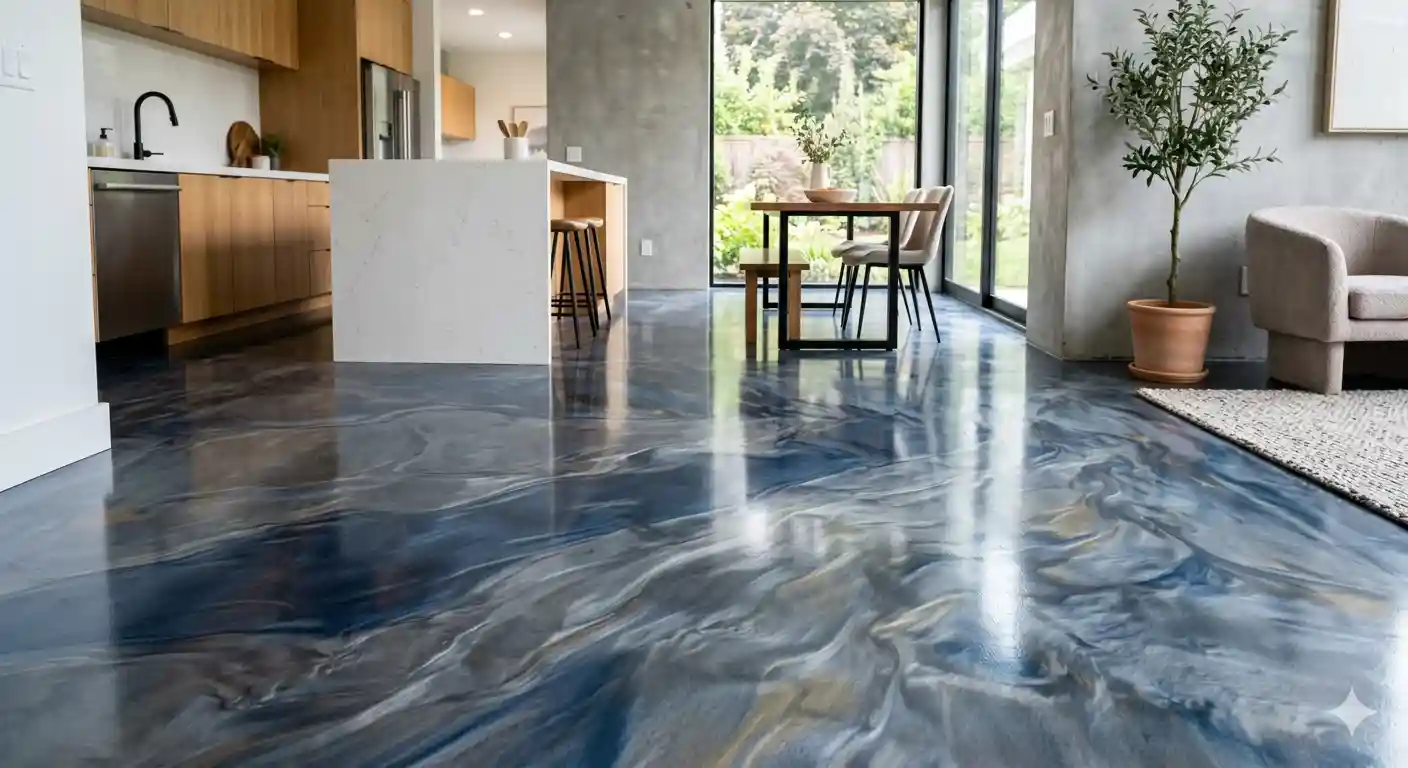
What is Epoxy Flooring? A Complete Guide to Resin Floors
In the fast-paced world of interior design, finding a solution that balances stunning aesthetics with rugged durability can be a challenge. Epoxy flooring has emerged as a revolutionary choice, allowing homeowners and business owners alike to enhance the longevity and visual appeal of their surfaces.
Whether you are looking to renovate a garage or upgrade a commercial showroom, understanding the mechanics of epoxy is the first step toward a successful transformation.
What Exactly is Epoxy Flooring?
Epoxy flooring is a specialized synthetic resin system applied directly onto concrete substrates. It is created by mixing resin with a hardening agent, triggering a chemical reaction that results in a rigid, plastic-like surface.
Once the layers are cured, they form a permanent bond with the concrete, creating an impervious and decorative barrier. To be officially classified as “flooring” rather than just a “coating,” the system should be at least 2 millimeters thick.
How It’s Applied
Unlike traditional tiles, epoxy is poured, coated, or troweled onto the floor. Multiple layers are usually applied to ensure the finish is:
- Stain-resistant
- High-gloss
- Seamless
- Extremely durable
The Key Benefits of Using Epoxy
Experts frequently recommend epoxy because of its superior mechanical and chemical resistance. Here is why it remains a top choice for modern interiors:
- Chemical and Moisture Protection: Epoxy is non-porous, meaning it shields the underlying concrete from oils, liquids, and harsh cleaning agents.
- Low Maintenance: Because it is a seamless surface, dirt and grime have nowhere to hide. Most spills can be wiped away with minimal effort.
- High Impact Resistance: These floors are designed to withstand heavy foot traffic and machinery, making them ideal for industrial and commercial use.
- Aesthetic Versatility: From matte finishes to high-gloss vibrant colors, epoxy can be customized to match any design vision.
- Safety and Temperature Resilience: Many formulas include slip-resistant additives and can withstand extreme temperature fluctuations, from freezers to outdoor patios.
Common Types of Epoxy Floors
Depending on your specific needs, there are several categories of epoxy systems to choose from:
- Epoxy Terrazzo: A decorative blend of epoxy and aggregates like marble or glass, polished to a high-shine finish.
- Epoxy Flake Coating: Features colored chips scattered over the base for a multi-toned, textured look.
- Self-Leveling Epoxy: Ideal for smoothing out cracked or damaged concrete, creating a perfectly level surface.
- Antistatic Epoxy: Specialized for environments with sensitive electronics to prevent electrostatic discharge.
- Vapor Barrier Coating: Applied to mitigate moisture transmission before installing hardwood or vinyl.
Pros and Cons: Is It Right for You?
While epoxy flooring offers incredible value, it is important to weigh the advantages against the drawbacks.
| Pros | Cons |
|---|---|
| Long-term durability and value | Can feel hard and cold underfoot |
| Eco-friendly (often VOC-free) | Transmits “contact noise” when walking |
| Resistant to heavy abuse and equipment | Substrate imperfections may show through |
| Minimal maintenance required | Difficult to pair with underfloor heating |
Final Thoughts on Epoxy Transformations
Epoxy flooring is a powerhouse solution for anyone seeking a blend of style and strength. While the installation requires a flat, well-prepared substrate, the resulting finish provides an easy-to-clean, chemical-resistant surface that lasts for years.
Pro Tip: To ensure a flawless finish, always consult with a flooring specialist to determine which epoxy system best suits your environment’s specific demands.

Leave a comment
Please note, comments need to be approved before they are published.